Is Semantic Scholar reliable? Yes, as a place to find real academic papers: it is a free search engine run by Ai2, a nonprofit research institute, and every result points to an actual published paper or preprint. It is less reliable for the numbers and summaries it adds on top, such as citation counts, author pages and AI generated TLDRs, so check those against the paper itself before you rely on them.
That split is the whole story, and the rest of this guide explains it. We read Semantic Scholar's own about page, its FAQ, its API page and the technical paper its team publishes about the platform, and pulled out what each part is good for. Everything below was checked on October 28, 2026.
Is Semantic Scholar reliable? The short answer
Think of Semantic Scholar as two layers.
The first layer is the index: titles, authors, abstracts, venues and links to the full text. This comes from publishers, preprint servers and data providers, so a paper you find there exists. That makes it a good way to confirm that a reference is real, which matters now that chatbots sometimes invent sources.
The second layer is everything the site computes: citation counts, "highly influential" citations, field of study labels, author pages, TLDR summaries and the newer generative AI features. These are produced by models and heuristics. They are useful for sorting and skimming, but they are estimates, and Semantic Scholar says so itself in several places.
So the practical rule is simple. Trust it to find papers. Verify anything it tells you about a paper by opening the paper.
Is Semantic Scholar legit? Who runs it
Semantic Scholar is a legitimate, long running project. According to its about page, it launched in 2015 at Ai2, a nonprofit research institute founded in 2014 by Microsoft cofounder Paul Allen. The team describes itself as a research and product group within Ai2 and says it publishes open code and datasets alongside its tools.
It is not a publisher and it does not peer review anything. Its FAQ is direct about this: Semantic Scholar "does not endorse or support any claims made within any papers" on the site, and it is "not engaged in any editorial decisions in the publishing process." A paper showing up in the results tells you it exists, not that it is good.
That matters because the index includes preprints from servers like arXiv, which have not been through journal review. Check the venue line on each result. A journal or conference name means the paper went through that venue's process. An arXiv link alone means it may not have.
Where Semantic Scholar's data comes from
The team's technical paper, The Semantic Scholar Open Data Platform, lays out the pipeline. It lists more than 50 input sources, including the nonprofit Crossref, preprint servers such as arXiv, publishers through negotiated agreements and the team's own web crawler. Most sources update daily.
From there, the pipeline extracts text from PDFs, merges duplicate records of the same paper, links citations, works out which author is which and labels each paper's field. The paper is candid that PDF extraction is "difficult and subject to errors," and that the team also makes manual corrections when users email them.
On size, the about page says Semantic Scholar indexes over 200 million academic papers. Other official pages give slightly different totals at different dates, which is normal for a corpus that grows every day, so treat any exact figure as a snapshot.
What you can trust, and what to double check
Here is how we would weigh each part of the site.
| Feature | How it is made | How much to trust it |
|---|---|---|
| Paper title, authors, abstract | From publishers and data providers | High; still confirm the DOI |
| Links to PDFs and publisher pages | Open access copies and publisher links | High for finding the paper |
| Citation counts | Computed from citations in its own corpus | Medium; differs from other sites |
| Highly influential citations | Machine learning model on full text | Low to medium; a hint, not a verdict |
| Author pages | Automatic author disambiguation | Medium; can merge or split people |
| Field of study labels | Classifier on title and abstract | Medium; English only |
| TLDR summaries | AI model | Use for skimming only |
| Ask This Paper, term definitions | Generative AI | Verify every answer |
Citation counts
The FAQ explains that citation counts only include citations found in Semantic Scholar's own corpus. Its focus is published articles and preprints, book coverage is "very limited" and patents are not included. Some publishers also do not share reference data openly. So your numbers will often differ from Google Scholar or a publisher's site. That is not a bug; it is a different data set. If a count matters (for a grant or a job application), say which source you used.
The same FAQ warns against using its h-index for comparing researchers or assessing research, because citation rates vary by field and career stage.
Influential citations and citation intent
Semantic Scholar flags some citations as "highly influential" and labels others by intent: background, method or result. Both features depend on having the full text of the citing paper, and the FAQ notes that some influential citations may not be flagged because of gaps in full text access. Use them to find papers worth reading, not as proof that a study was important.
Author pages
Author pages are built automatically. The FAQ admits that authors with similar names are hard to separate and that "errors may still occur." If you are looking up a researcher, scan their paper list for obvious strangers. If it is your own page, you can claim it and add or remove papers; edits take about 24 hours to show.
AI summaries and generative features
TLDRs are short AI generated summaries, and the FAQ says they currently cover only computer science and biomedical papers. For the generative features (Ask This Paper and the term definitions in the Semantic Reader), the FAQ warns that output "will not be free of errors," that mistakes can be subtle and hard to spot, and that you should verify generated text whenever possible. The FAQ also says Ask This Paper has only been tested on English papers and works on a subset of them.
Is Semantic Scholar free?
Yes. The about page describes its search and discovery tools as free, and you do not need an account to read paper pages. A free account adds a library with folders, email alerts for new papers and citations, and Research Feeds that recommend recent papers based on what you save.
Free does not mean every paper is free to read. Semantic Scholar links to open access copies where they exist, but some papers are only on the publisher's site behind a paywall. If your university subscribes, sign in with your institution: the FAQ lists OpenAthens, eduGAIN and InCommon sign in, plus GetFTR and LibKey buttons that take you to the copy your library pays for.
Is the Semantic Scholar API free?
Yes, with rate limits. The API page says most endpoints work without a key, but unauthenticated traffic shares a limit of 1,000 requests per second across all users and may be throttled at busy times. A free API key gives you your own allowance, starting at 1 request per second on all endpoints. Ai2 says it prioritizes key requests from academic and research institutions, nonprofits and government bodies, and reviews others case by case. Monthly dataset downloads are also available.
How to use Semantic Scholar well
A few habits make the results far more dependable.
- Search with full words. The FAQ says search does not support Boolean operators (AND, OR, NOT) or wildcards, and it does not expand abbreviations. Quoted phrases do work. Type "knowledge discovery and data mining," not just the acronym.
- Change the sort order. Results can be sorted by relevance, citation count, most influential papers or recency. Sorting by recency is the quickest way to see whether an older finding has been revisited.
- Open the full text before you cite. Use the View PDF or publisher link, read the methods and results, and do not quote a TLDR.
- Export citations properly. The Cite button gives BibTeX, MLA, APA and Chicago formats and an EndNote file, and the Zotero browser connector can save the paper, the PDF where available and the TLDR straight into your library.
- Check the language. Semantic Scholar currently focuses on English publications, so if your field publishes heavily in other languages, search a second database as well.
- Set alerts. Follow a key paper or author to get emailed when new citations appear, once a day or once a week.
There is no phone app; the site works in mobile browsers. Semantic Reader, the enhanced PDF view with citation cards, is limited to papers published on arXiv, according to the FAQ.
Semantic Scholar vs AI research assistants
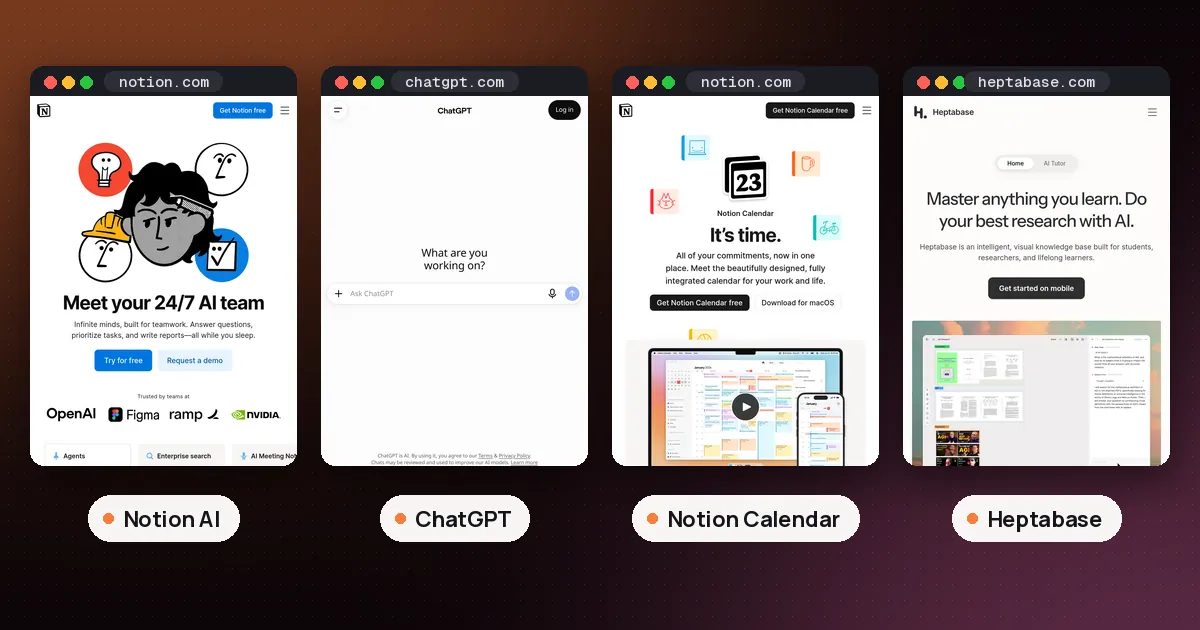
Semantic Scholar gives you a list of papers. AI research assistants try to give you an answer. They work well together.
- Consensus answers a yes or no style research question and cites the papers behind it.
- Elicit builds comparison tables across many studies, which helps for literature reviews.
- Scite shows whether later papers supported or contradicted a study, which speaks directly to the reliability of a finding rather than of the search engine.
- ResearchRabbit maps related work from a few seed papers you already like.
- Perplexity suits everyday web questions better than academic ones.
Several of these tools draw on open scholarly data, and the Semantic Scholar team's paper notes that its data platform became more important to the research community after Microsoft Academic Graph was retired in 2021. Our guide to the best AI tools for research paper writing shows how to combine them in one workflow, with Semantic Scholar as the free check that a cited paper really exists.
Who should use Semantic Scholar
Students writing essays and term papers: it is a fast, free first stop, and a reliable way to confirm sources a chatbot gave you. Pair it with the tips in our best AI tools for students guide.
Graduate students and researchers: use the library, Research Feeds and alerts to keep up with a field, but always read the full paper and confirm citation metrics elsewhere if they matter.
Developers building study or reference tools: the free API and monthly datasets are the main draw.
People outside academia checking a health or science claim: the site helps you find the original study, but it will not tell you whether the study was good. Look for the venue, the date and whether later work agrees.
FAQ
Is Semantic Scholar a credible source to cite?
No, cite the paper, not the search engine. Semantic Scholar is a discovery tool that points to papers published elsewhere. Open the paper, check its venue and DOI, and cite it in the style your instructor or journal requires.
Is Semantic Scholar peer reviewed?
No. It indexes peer reviewed journal articles and conference papers alongside preprints that have not been reviewed. Its FAQ says it takes no part in editorial decisions and does not endorse claims in the papers it lists.
Why is the citation count different from Google Scholar?
Each service counts citations within its own collection. Semantic Scholar's FAQ says its book coverage is very limited, it excludes patents, and some publishers do not share reference data, so its totals often differ from other sites.
Does Semantic Scholar use AI?
Yes. Machine learning models sort search results, label fields of study, separate authors with similar names and write TLDR summaries, and some features use large language models. The site warns that generated text can contain errors, so check it against the paper.
Do I need an account to use Semantic Scholar?
No. You can search and read paper pages without one. A free account adds a saved library, alerts and Research Feeds, and institutional sign in gives you the full text your library subscribes to.
Is Semantic Scholar safe to use?
It is a nonprofit project from Ai2 that has run since 2015, and there is no paid plan for readers to be upsold into. You can browse without an account. If you do sign up through Google or your institution, the FAQ says Semantic Scholar does not collect your username or password; those stay with the sign in provider.