The best AI tools for law students in 2026 are the ones your school already pays for. Lexis+ AI (now called Protégé) and Westlaw's CoCounsel Legal come with your law school research accounts, and Bloomberg Law offers a free academic account, so use those for anything that touches case law. Add a general study tool such as Gemini Notebook for your own notes and outlines, keep every legal answer checked against the actual case or statute, and never paste client facts into a personal chatbot account.
This guide sorts the tools by the jobs a law student actually has: research, class prep, outlining, writing and recording. It also covers the parts most lists skip, which are what your academic login allows, why legal AI still needs checking, and what changes once you work in a clinic or a summer job. For general study tools beyond law, see our best AI tools for students.
The quick list
| Job | Best pick | What it costs you | The catch |
|---|---|---|---|
| Legal research with AI | Lexis+ AI (Protégé) | Included with your school's Lexis account | Academic use only, except during summer access |
| Agentic research and briefing help | Westlaw CoCounsel Legal and Deep Research | Included with your school's Westlaw account | Students stay on the classic version until 2027 |
| Dockets and a second research platform | Bloomberg Law | Free academic account | Check your school's AI features and rules |
| Notes, readings and outlines you own | Gemini Notebook | Free plan | Answers come only from what you upload |
| Explaining doctrine and practice questions | ChatGPT or Claude | Free plans | Never use them as a source of law |
| Recording lectures | Otter | Free plan | Ask your professor before recording |
| Editing memos and briefs | Grammarly | Free plan | It checks grammar, not citations |
Best AI tools for law students, by job
Legal research: Lexis+ AI (Protégé)
LexisNexis expanded free access to Lexis+ AI to students at ABA accredited law schools, after testing it with faculty and selected students. Law libraries now describe it as Protégé, the newer name for the same AI layer inside Lexis. You sign in with the Lexis account your school gives you, so there is nothing extra to buy.
Its strength is that answers are grounded in Lexis content and link to real authority you can open, Shepardize and read. LexisNexis also runs a Protégé Practice Center for students with videos, guides and prompt building tips. Use it the way a good research assistant would be used: to find a starting set of cases and secondary sources, then read them yourself.
Agentic research and class prep: Westlaw CoCounsel Legal
Thomson Reuters brought CoCounsel Legal and Deep Research to law school Westlaw accounts, which a January 2026 report put at more than 120,000 US law students across more than 200 schools. Deep Research plans a multistep research path and returns a report grounded in Westlaw and Practical Law content.
Thomson Reuters' own guide to preparing for class with AI tools shows the student side. You open a case on Westlaw, launch CoCounsel Chat from the CoCounsel tab, pick a suggested question, then ask follow ups such as a timeline of events. You can also upload your own notes as PDF, RTF or DOCX files, compare your notes with a study partner's, generate multiple choice questions, and ask for a short skeleton outline or a longer combined one.
One timing detail matters. Thomson Reuters' faculty resources page says faculty got early access to the next generation of CoCounsel Legal on September 14, while students stay on the classic version this fall and move to the next generation in 2027. Tutorials you watch may show screens you don't have yet.
A second platform: Bloomberg Law
Bloomberg Law's law school page offers a free academic account and lists research databases, memo templates, law review tools and, for 3Ls, Litigation Analytics. The University of Chicago's law library guide describes Bloomberg Law's AI Assistant as a panel for summaries and targeted questions about a document. Bloomberg is especially handy for dockets and trial court filings, which makes it a good complement to Lexis or Westlaw rather than a replacement.
Your own notes and outlines: Gemini Notebook
For material you already have (your class notes, your briefs, a syllabus, a professor's posted slides), Gemini Notebook is the best general tool. It answers from the files you add and cites them, which makes checking quick. Our guide on using NotebookLM for studying walks through the setup. Upload only material you're allowed to share, and remember that it knows nothing about a case you haven't added.
Explaining doctrine: ChatGPT or Claude
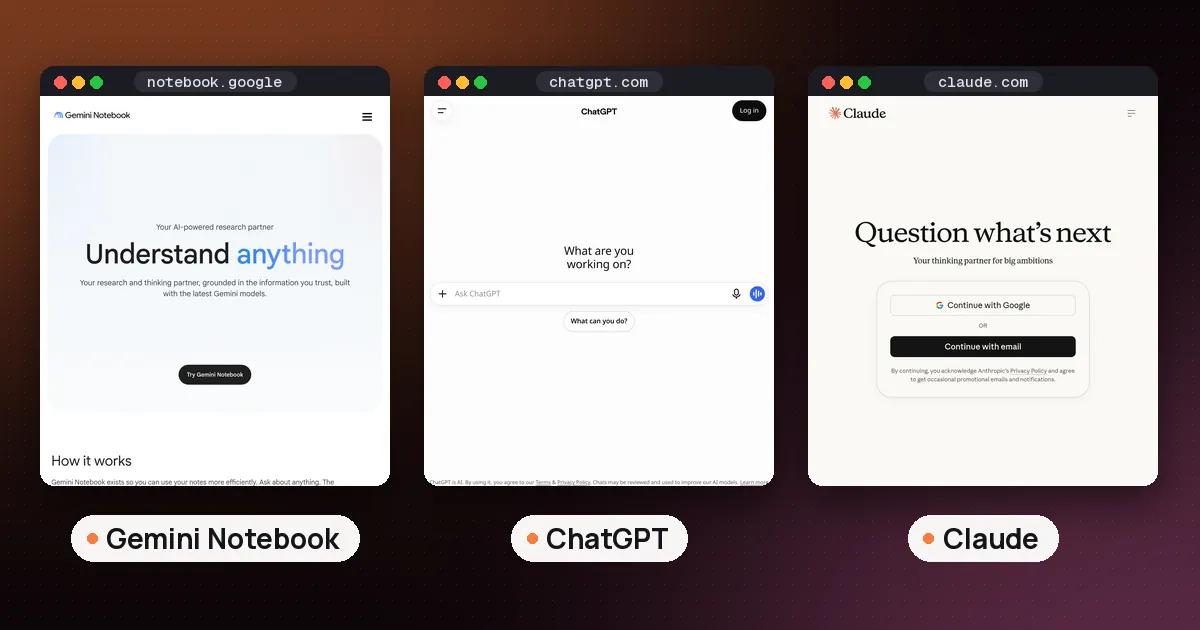
ChatGPT and Claude are useful for plain English explanations of a concept you already read about, for hypotheticals to test yourself, and for turning your outline into practice questions. Our guide on how to make flashcards with AI has a prompt that works well for rules and exceptions. Treat both as tutors, never as a citator. A general chatbot can describe a rule confidently and attach a case that does not say it. If you want the free student options, see is ChatGPT free for students.
Recording and writing: Otter and Grammarly
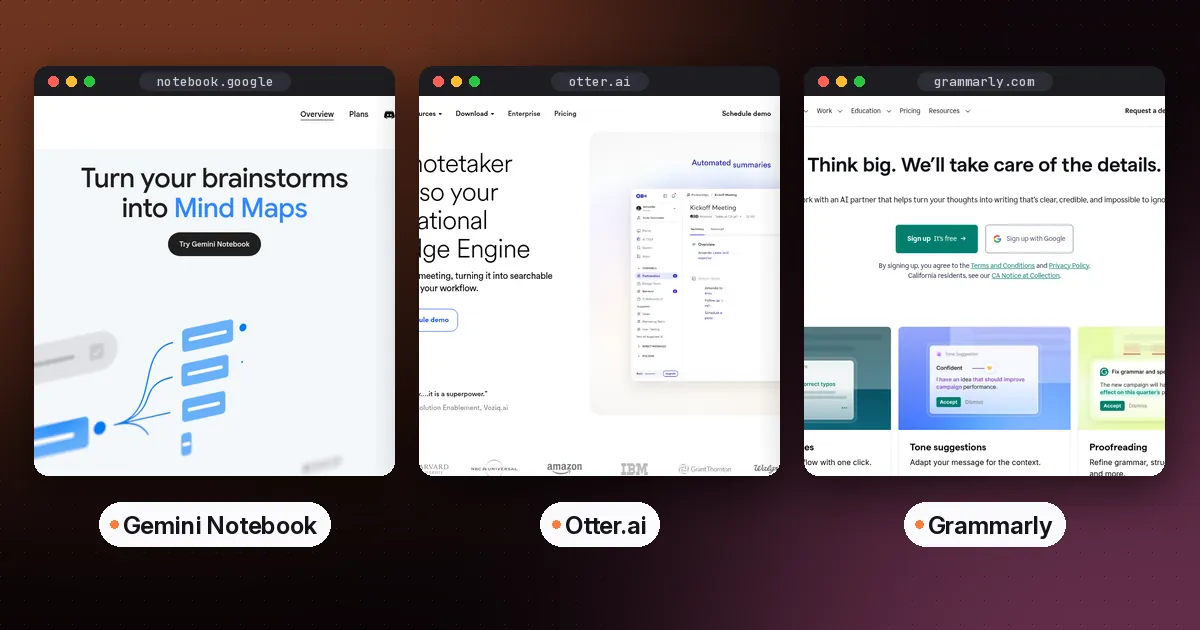
Otter can transcribe lectures, but recording rules are set by each professor and school, so ask before you record a class. Our roundup of the best AI note takers for college students compares other options. For memos and briefs, Grammarly catches grammar and clarity problems. It does not know Bluebook rules or whether your citation supports your sentence, so keep that part manual.
What your school login allows
Free access comes with conditions, and breaking them can cost you the account.
The LexisNexis educational ID policy says students may use the ID only for academic purposes: class work, moot court, law review, research for a professor, and unpaid internships, externships or clinics for credit. Research for a firm or company that pays you is commercial use. The exception is Summer Access, which runs May through August and expands permitted use to firms, agencies, courts, internships and clerkships. Each ID belongs to one person and may not be shared.
Westlaw's rules are set per school. Harvard Law School's library, for example, explains that returning students can use Westlaw over the summer for noncommercial research but not when billing a client, and that new graduates can register for Grad Elite access with 60 hours a month for six months. Check your own library's page before your summer job starts, and check your employer's policy too.
Why legal AI still needs checking
Legal research AI is better than a general chatbot, but it is not error free. A preregistered study by Stanford RegLab and HAI researchers, published as Hallucination Free? Assessing the Reliability of Leading AI Legal Research Tools, tested Lexis+ AI, Westlaw AI Assisted Research and Ask Practical Law AI on more than 200 legal queries. The tools hallucinated between 17% and 33% of the time. Lexis+ AI answered 65% of queries accurately and Westlaw's tool 42%. The tests ran on 2024 versions, and both companies have shipped new products since, so treat the numbers as a warning about the category rather than a ranking of today's tools.
The study also names the subtle failure: an answer that states the law correctly but cites a source that does not support it. Stanford HAI's summary notes that general purpose chatbots hallucinated between 58% and 82% of the time on legal queries in the team's earlier study, and recalls a New York lawyer sanctioned for citing cases ChatGPT invented.
The practical rule for students: open every case and statute an AI tool cites, read the relevant passage, and run it through KeyCite or Shepard's before it goes in a memo.
Clinics, internships and client facts
The rules change once real clients are involved. ABA Formal Opinion 512, issued July 29, 2024, says uncritical reliance on AI output can produce inaccurate advice or misleading statements to courts, and that relying on output without an appropriate degree of independent review could violate the duty of competence. It also says a client's informed consent is required before information about the representation goes into a self learning AI tool, and that boilerplate language in an engagement letter is not enough.
Law libraries make the same point in plainer terms. The University of Chicago law library guide tells students that free consumer accounts of ChatGPT, Gemini or Claude do not carry enterprise privacy protections and should be treated as public. So in a clinic, use only the tools your supervisor approves, and keep client names and facts out of personal accounts entirely.
A weekly routine for 1Ls
- Before class: read the case yourself first. Then open it on Westlaw or Lexis and ask the AI for the procedural posture or a timeline to check your brief.
- After class: add your notes to Gemini Notebook or upload them to CoCounsel and ask what you missed compared with your brief.
- Weekly: turn the week's rules into flashcards and quiz yourself. Use ChatGPT or Claude for new hypotheticals.
- Legal writing: research in Lexis or Westlaw, verify every authority, write the memo yourself, and run Grammarly last.
- Before exams: ask your notes which exceptions and splits came up most, then build your own outline from that list.
Exams and honor codes
AI rules in law school are set by each course and school, and they can differ a lot between a doctrinal exam, a legal writing assignment and a seminar paper. Read the syllabus, ask when it is unclear, and keep your drafts as a record of your own work. Our guide to AI tools for research paper writing covers disclosure habits that carry over to seminar papers.
FAQ
What is the best free AI tool for law students?
For legal research, Lexis+ AI (Protégé) or Westlaw CoCounsel through your school account, since both are included at no extra cost and cite real authority. For your own notes, Gemini Notebook's free plan is the best general option.
Do law students get Westlaw CoCounsel for free?
Students at participating US law schools get CoCounsel Legal and Deep Research through their school Westlaw accounts. Students use the classic version through this fall, and Thomson Reuters says the next generation reaches students in 2027.
Can I use my law school Lexis or Westlaw account at my summer job?
Lexis allows it during Summer Access, May through August, at firms, agencies, courts and clerkships. Westlaw rules vary by school; at Harvard, for example, summer use must be noncommercial and not billed to a client. Always check your employer's policy too.
Is it safe to use ChatGPT for legal research in law school?
Use it to explain concepts and quiz yourself, not to find or cite law. General chatbots hallucinated on most legal queries in Stanford researchers' tests, and even specialist legal tools made errors, so verify every authority in Lexis or Westlaw.
Can I put clinic or client information into an AI tool?
Only into a tool your clinic or employer has approved. ABA Formal Opinion 512 says informed client consent is needed before client information goes into a self learning AI tool, and law libraries treat free consumer chatbot accounts as public.